
Latest
Atiku Opposes Feb 20, 2027 Election Over Ramadan


Former Vice President Atiku Abubakar has called on the Independent National Electoral Commission (INEC) to reconsider the February 20, 2027 date set for Nigeria’s next presidential election, citing concerns that it coincides with the holy month of Ramadan.
In a statement posted on his verified X (formerly Twitter) account on Saturday, the 2023 presidential candidate of the Peoples Democratic Party (PDP) expressed concern over what he described as a lack of sensitivity in fixing a nationwide election during a period of religious observance for millions of Nigerian Muslims.
According to Atiku, the scheduled date falls within the anticipated Ramadan period in 2027, projected to run from February 7 to March 8. Ramadan is a sacred month in Islam marked by fasting from dawn to sunset, prayer, and spiritual reflection. He argued that holding elections during this time could impose additional physical and mental strain on voters observing the fast.
“The Independent National Electoral Commission (INEC) must urgently reconsider the February 20, 2027 date it has announced for the general elections,” Atiku stated. He noted that the date “falls squarely within the Ramadan period… a sacred season of fasting, reflection, and spiritual devotion for millions of Nigerian Muslims.”
Atiku emphasized that elections in Nigeria typically involve long hours at polling units, extended waiting times, and, in some regions, exposure to harsh weather conditions. He said these factors could discourage participation among fasting voters and potentially affect turnout.
“Elections are not mere administrative rituals; they are national exercises that demand maximum participation, physical endurance, and collective focus,” he wrote. “Fixing such a critical civic exercise in the middle of a major religious observance reflects poor judgment and a troubling lack of sensitivity to the nation’s socio-religious realities.”
Nigeria is a multi-religious and multi-ethnic country where electoral planning often takes into account national holidays, security concerns, and logistical factors. Atiku argued that inclusive planning should remain central to the electoral body’s preparations, particularly in a country with deep religious diversity.
He further questioned the electoral commission’s judgment, suggesting that scheduling conflicts of this nature raise broader concerns about preparedness for the 2027 general elections.
“In a diverse country like Nigeria, inclusive planning is not optional, it is fundamental,” Atiku stated. “If INEC struggles with getting a simple matter of timing right, Nigerians are justified in asking: What assurance do we have that it will competently deliver free, fair, and credible elections in 2027?”
INEC had announced on Friday that the presidential and National Assembly elections would be held on February 20, 2027, in line with constitutional and statutory timelines governing the conduct of elections in Nigeria. While the commission has indicated that its schedule aligns with legal requirements, Atiku’s intervention has introduced a fresh dimension to the conversation around the electoral calendar.
Election scheduling has historically been a sensitive matter in Nigeria, where voter turnout and public confidence in the process are critical indicators of democratic health. Political observers note that any perception of exclusion or disadvantage could influence participation levels and political discourse ahead of the polls.
Atiku’s call for a review may prompt further engagement between stakeholders, including political parties, religious leaders, and civil society organizations, on the suitability of the proposed date. Whether INEC will adjust the timetable remains to be seen.
As preparations for the 2027 elections gradually gather momentum, debates over logistics, inclusivity, and credibility are expected to intensify. The decision on the election date could have broader implications for voter participation and public trust in the electoral process.
....See More



Tension erupted in Edjeba community in Warri, Delta State, on Sunday after a group of traditional masqueraders and accompanying youths allegedly attacked a branch of the Redeemed Christian Church of God (RCCG), leaving six worshippers injured, including the pastor.
The incident reportedly occurred around 10 a.m. on April 19, 2026, shortly after the conclusion of Sunday service at the RCCG Edjeba Shell Gate branch.
According to eyewitness accounts, the church’s presiding pastor, identified as Barrister Albert, was preparing to leave the premises with his family when a procession of masqueraders passed in front of the church.
A witness said the situation escalated after an alleged attempt by one of the masqueraders to assault female members of the congregation.
“The pastor tried to intervene and stop the masquerader from touching the girls. That was when the situation turned violent,” the witness said.
The source added that the confrontation quickly escalated into an attack on the pastor and other church members who attempted to intervene.
During the incident, six worshippers sustained injuries of varying severity, with three reportedly in critical condition and receiving medical treatment at an undisclosed hospital.
The attackers were also said to have damaged parts of the church property during the unrest.
Residents and church leaders in Warri have called on the Delta State Government and security agencies, including the Nigeria Police Force, to investigate the incident and ensure those responsible are identified and prosecuted.
Community members also noted that Edjeba has experienced recent cases of violence, including previous allegations of assaults linked to masquerader groups and a separate reported attack on a young man in the area.
....See More
Residents of Hadejia in Jigawa State are preparing to commemorate the historic 1906 resistance against colonial rule with a two-day event scheduled for April 24 and 25 in Hadejia town.
The announcement was made by the Chairman of the Organising Committee and Galadiman Hadejia, Alhaji Usman Abdul’aziz, during a press briefing.
He said the commemoration is intended to preserve cultural heritage, promote courage, and reinforce the historical identity of the Hadejia people.
According to him, the event recalls a major confrontation in 1906 during colonial rule, which reportedly claimed the lives of over 800 Hadejia warriors, including the then Emir, Alhaji Muhammad Mai Shahada. He also noted that British forces suffered casualties, including their commanding officer.
Alhaji Abdul’aziz outlined activities planned for the programme, which include guided visits to historical sites connected to the event.
He also confirmed that a book documenting the historical incident will be officially unveiled during the commemoration. The publication was authored by the late Professor Haruna Wakili alongside other historians.
The event is expected to draw historians, traditional leaders, and members of the community as part of efforts to preserve the memory of the 1906 resistance.
....See More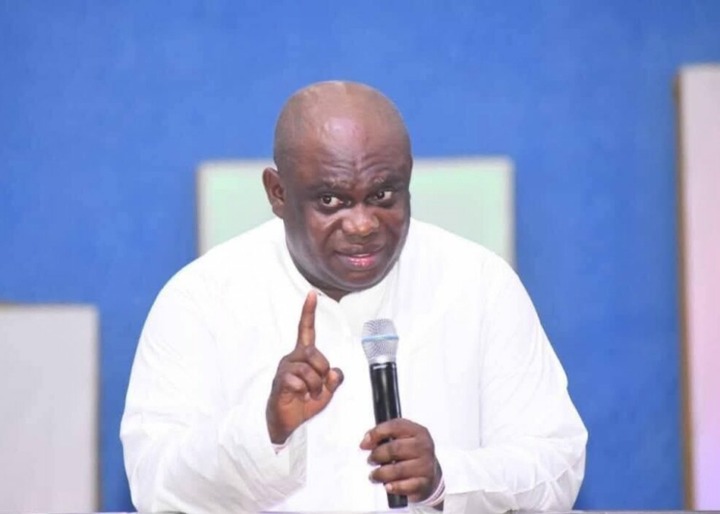
The Founder and General Overseer of Omega Power Ministries (OPM), Apostle Chibuzor Gift Chinyere, has urged the Federal Government to scrap the Unified Tertiary Matriculation Examination (UTME) conducted by the Joint Admissions and Matriculation Board (JAMB), describing the process as burdensome for students.
Apostle Chinyere made the call on Sunday during a sermon at the international headquarters of the church in Port Harcourt, Rivers State, where he questioned the relevance of the current tertiary admission system.
He argued that multiple stages of assessment, including WAEC, UTME, and post-UTME, place excessive pressure on candidates and often force them to repeat the process if they fail to meet admission requirements.
“In Nigeria, you will write WAEC; after WAEC, you will write JAMB; after JAMB, you will write post-UTME; then you wait for the school cut-off mark and departmental cut-off mark. If you don’t meet it, you wait another year, register for JAMB again, and start afresh. It is very frustrating,” he said.
The cleric also said JAMB has become less relevant, arguing that universities still conduct additional screening after the UTME.
“JAMB has lost its relevance because universities still organise their own entrance examinations after UTME,” he added.
Apostle Chinyere further raised concerns about the 6:30 a.m. examination schedule, saying it exposes candidates to safety risks and additional costs, particularly for those required to travel long distances.
“Sometimes I wonder why JAMB fixes exams for 6:30 a.m. Do you know that for all my adopted children under OPM scholarships going for JAMB, I have to give them extra money to pay for hotels?” he said.
He explained that many candidates are forced to lodge near exam centres due to early morning timings and distant postings, which he said increases financial strain on families and sponsors.
“They cannot travel safely that early, so they have to stay overnight in hotels close to their centres. This creates additional financial pressure,” he stated.
The OPM founder also criticised the allocation of candidates to faraway centres, arguing that it heightens security concerns. He referenced reports of the reported abduction of UTME candidates in Benue State, describing it as troubling.
“I saw something on social media that 12 people who went to write JAMB in Benue State were kidnapped. It is really very unfortunate,” he said.
Comparing Nigeria’s system with admission processes abroad, he said some countries use more flexible approaches that do not rely on a single central examination.
“If you want to get admission into universities outside Nigeria, you don’t need JAMB. You apply to the university, they send you an unconditional letter of offer, and when fees are paid, a conditional offer follows after verification of results. They won’t ask you to write JAMB,” he explained.
He warned that the current system could contribute to an increase in out-of-school youths due to repeated admission setbacks.
Apostle Chinyere added that his organisation has sponsored educational scholarships for underprivileged Nigerians for over 15 years, stressing the need for reforms that improve access to higher education…….Continue Reading
....See More-

 Latest2 months ago
Wike Declares End to Rift with Governor Fubara Following Tinubu’s Peace Intervention
-

 Latest2 months ago
Ex-ADC National Woman Leader Kayauta Yakubu Officially Joins APC in Abuja
-

 Latest3 weeks ago
JUST IN: Fuel Prices Drop Again as NNPCL, Dangote Cut Rates Across Nigeria
-

 Politics3 weeks ago
Wave of Defections Rocks Reps as 26 Lawmakers Dump Parties
-

 Latest2 months ago
El-Rufai Accuses Akpabio of Driving Electoral Act Amendment Controversy [Video]
-

 Latest2 months ago
IPOB Condemns Anambra Government for Sealing Shops During Monday Sit-at-Home
-

 Latest2 months ago
Okonjo-Iweala Raises Alarm Over Fake AI Video Impersonating Her
-

 Latest2 months ago
Tinubu Vows to Defeat Banditry in Nigeria