
News
Atiku Opposes Feb 20, 2027 Election Over Ramadan


Former Vice President Atiku Abubakar has called on the Independent National Electoral Commission (INEC) to reconsider the February 20, 2027 date set for Nigeria’s next presidential election, citing concerns that it coincides with the holy month of Ramadan.
In a statement posted on his verified X (formerly Twitter) account on Saturday, the 2023 presidential candidate of the Peoples Democratic Party (PDP) expressed concern over what he described as a lack of sensitivity in fixing a nationwide election during a period of religious observance for millions of Nigerian Muslims.
According to Atiku, the scheduled date falls within the anticipated Ramadan period in 2027, projected to run from February 7 to March 8. Ramadan is a sacred month in Islam marked by fasting from dawn to sunset, prayer, and spiritual reflection. He argued that holding elections during this time could impose additional physical and mental strain on voters observing the fast.
“The Independent National Electoral Commission (INEC) must urgently reconsider the February 20, 2027 date it has announced for the general elections,” Atiku stated. He noted that the date “falls squarely within the Ramadan period… a sacred season of fasting, reflection, and spiritual devotion for millions of Nigerian Muslims.”
Atiku emphasized that elections in Nigeria typically involve long hours at polling units, extended waiting times, and, in some regions, exposure to harsh weather conditions. He said these factors could discourage participation among fasting voters and potentially affect turnout.
“Elections are not mere administrative rituals; they are national exercises that demand maximum participation, physical endurance, and collective focus,” he wrote. “Fixing such a critical civic exercise in the middle of a major religious observance reflects poor judgment and a troubling lack of sensitivity to the nation’s socio-religious realities.”
Nigeria is a multi-religious and multi-ethnic country where electoral planning often takes into account national holidays, security concerns, and logistical factors. Atiku argued that inclusive planning should remain central to the electoral body’s preparations, particularly in a country with deep religious diversity.
He further questioned the electoral commission’s judgment, suggesting that scheduling conflicts of this nature raise broader concerns about preparedness for the 2027 general elections.
“In a diverse country like Nigeria, inclusive planning is not optional, it is fundamental,” Atiku stated. “If INEC struggles with getting a simple matter of timing right, Nigerians are justified in asking: What assurance do we have that it will competently deliver free, fair, and credible elections in 2027?”
INEC had announced on Friday that the presidential and National Assembly elections would be held on February 20, 2027, in line with constitutional and statutory timelines governing the conduct of elections in Nigeria. While the commission has indicated that its schedule aligns with legal requirements, Atiku’s intervention has introduced a fresh dimension to the conversation around the electoral calendar.
Election scheduling has historically been a sensitive matter in Nigeria, where voter turnout and public confidence in the process are critical indicators of democratic health. Political observers note that any perception of exclusion or disadvantage could influence participation levels and political discourse ahead of the polls.
Atiku’s call for a review may prompt further engagement between stakeholders, including political parties, religious leaders, and civil society organizations, on the suitability of the proposed date. Whether INEC will adjust the timetable remains to be seen.
As preparations for the 2027 elections gradually gather momentum, debates over logistics, inclusivity, and credibility are expected to intensify. The decision on the election date could have broader implications for voter participation and public trust in the electoral process.



Yesufu announced her decision in a statement released on Friday, explaining that the party had resolved not to conduct primaries for the senatorial seat in the FCT, although it would proceed with primaries for House of Representatives positions within the territory.
According to her, the internal party decision made it necessary for her to step aside from the contest.
“Our party has decided not to conduct primaries for the senatorial seat in FCT Abuja. It however intends to conduct primaries for House of Representatives. Go ahead and make your choice known,” she stated.
Her withdrawal comes amid ongoing political realignments within opposition circles as parties reposition ahead of the 2027 elections.
From Activism to Politics
For years, Yesufu built a strong public reputation as one of Nigeria’s most outspoken activists, playing key roles in movements such as #BringBackOurGirls and the #EndSARS protests.
In May 2026, she formally announced her intention to contest the FCT senatorial seat, arguing that activism should extend into legislative governance rather than remain limited to civic protests.
Her entry into partisan politics was widely seen as a shift from street-level advocacy to institutional engagement aimed at driving reform from within the system.
Political Alignment With Peter Obi Movement
Yesufu’s political activities in recent years have been closely linked to former presidential candidate Peter Obi, under whose 2023 campaign she became one of the most visible supporters of the Labour Party’s reform agenda.
She played a prominent role in mobilising support for the “Obidient” movement and later aligned with broader opposition coalitions ahead of 2027.
Although she has moved across different political platforms, including the Nigeria Democratic Congress, she has consistently maintained that her support is based on principles of accountability and good governance rather than blind loyalty.
Senate Ambition and Grassroots Push
Following her defection to the NDC, Yesufu officially declared interest in the FCT senatorial seat and embarked on grassroots consultations across area councils within the territory.
Her campaign focused on issues such as security, education, healthcare, and improved representation for residents of the Federal Capital Territory.
Political analysts had described her candidacy as a test case for whether activist-driven popularity could translate into electoral success in Nigeria’s structured party system.
Speculation Over Party Dynamics
Her sudden withdrawal has sparked speculation about internal arrangements within the NDC, with suggestions that the party may have shifted support toward another aspirant believed to have stronger grassroots structures.
However, the party has not issued an official explanation regarding the decision.
Focus Shifts to 2027 Presidential Election
Despite stepping down from the senatorial race, Yesufu urged her supporters to remain focused on broader political goals ahead of the 2027 presidential election.
“I urge each and every one of you to remain calm and focus on the bigger picture which is the presidential election. Nigeria will be OK,” she said.
She also expressed appreciation to supporters of her senatorial ambition and pledged continued engagement with residents across all six area councils in the FCT.
Her withdrawal underscores the complexities of Nigeria’s party politics, where activism, popularity, and grassroots political structures often intersect in unpredictable ways.
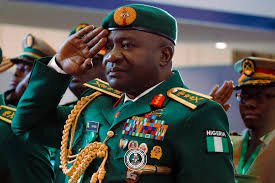
Speaking in a social media statement marking three years of the current administration, Musa said security forces have recorded significant gains against terrorism but acknowledged that abductions continue to pose serious challenges across the country.
He further argued that kidnapping is not only a security issue but also a reflection of declining societal and family values, urging Nigerians to reject “get-rich-quick” mentalities that may encourage criminal behaviour.
His remarks come amid renewed concern over a series of school kidnappings recorded between May 13 and May 15, during which at least 82 pupils were abducted in separate incidents across Borno State and Oyo State.
The Oyo incident was particularly deadly, involving the killing of a teacher, a motorcyclist, and a security operative who reportedly died after encountering explosives planted by the attackers.
Security authorities have linked the Oyo attack to the JAS terror faction, which has reportedly been pushed out of several regions following sustained military operations.
Recent data from Amnesty International indicates that more than 1,100 abductions were recorded within the first four months of 2026 alone, highlighting the scale of insecurity affecting parts of the country. Similar mass kidnapping incidents were also reported in Kogi State in April, as well as in Kebbi, Niger, and Zamfara states in late 2025.
Despite these challenges, the Defence Minister pointed to some operational successes, including the reported killing of a senior ISIS-linked commander, as evidence of improved military effectiveness.
He also noted increased cooperation between Nigeria and international partners, including the United States, United Kingdom, France, Brazil, and Turkey, who have provided support in equipment and intelligence sharing.
Musa cautioned that allowing terrorism to become deeply entrenched in any country makes it extremely difficult to eradicate, citing Turkey’s decades-long struggle with insurgency as an example of how prolonged conflict can evolve.
He added that sustained collaboration between security agencies and citizens remains critical to improving national security outcomes.
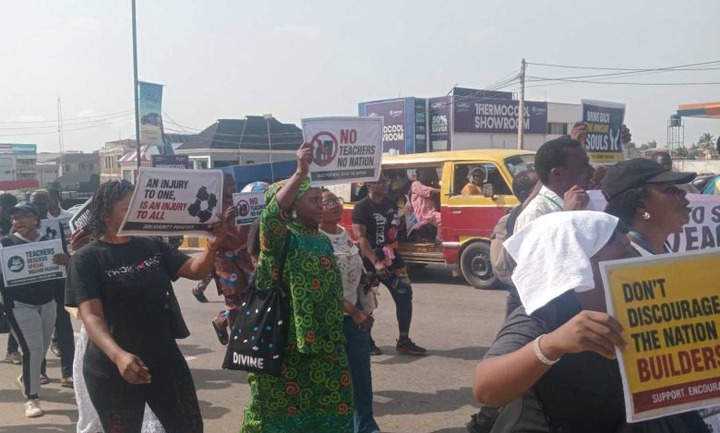
The protesters gathered at the busy Iwo Road axis in Ibadan, chanting solidarity songs and carrying placards with messages calling for the immediate rescue of the victims.
Many of them were heard shouting “bring back our children” and “no more bandits” as they marched through major parts of the city.
The protest is linked to the violent attack that occurred on May 15 in Esiele, Oriire Local Government Area of Oyo State, where armed men invaded schools and abducted more than 40 students and teachers.
The incident sparked widespread fear after reports confirmed that heavily armed kidnappers stormed the community and whisked away victims into nearby forests.
In the days that followed, disturbing footage reportedly released by the abductors surfaced online, showing victims being held in harsh conditions deep within the forest.
With no clear breakthrough in rescue efforts weeks after the incident, teachers from both primary and secondary schools across the state decided to stage a public demonstration to pressure authorities into taking stronger action.
The latest protest follows a similar demonstration held earlier by concerned residents who also demanded swift intervention over the ongoing kidnapping crisis in the state.
Authorities are yet to issue a fresh update on the status of the abducted victims as public pressure continues to mount.
https://x.com/ChuksEricE/status/2060316611471462768
-

 News4 months ago
Wike Declares End to Rift with Governor Fubara Following Tinubu’s Peace Intervention
-

 News2 months ago
How Police Uncovered ₦100m Loot and Arrested 10 Suspects
-

 News4 months ago
Ex-ADC National Woman Leader Kayauta Yakubu Officially Joins APC in Abuja
-

 News4 months ago
El-Rufai Accuses Akpabio of Driving Electoral Act Amendment Controversy [Video]
-

 News2 months ago
JUST IN: Fuel Prices Drop Again as NNPCL, Dangote Cut Rates Across Nigeria
-

 News4 months ago
Okonjo-Iweala Raises Alarm Over Fake AI Video Impersonating Her
-

 News4 months ago
Tinubu Says Terrorism Is Alien to Nigeria, Keeping Leaders Awake at Night
-

 News4 months ago
IPOB Condemns Anambra Government for Sealing Shops During Monday Sit-at-Home